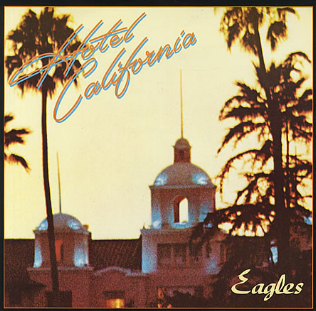
Some songs don’t just get stuck in your head—they get under your skin. They linger. Not because they’re catchy, but because they’re saying something your soul somehow already knows. Hotel California by The Eagles is one of those. It doesn’t hit you like a normal song—it kind of wraps around you like a dream that starts off nice, but leaves you disturbed when you wake up. It’s poetic, eerie, and... coded. Like a riddle dressed up in smooth guitars and haunting harmonies.
If you're on any kind of awakening path, you probably feel it too. This isn’t just a rock classic. It’s a mirror. A warning. A weirdly beautiful trap.
Welcome to the Illusion
"On a dark desert highway, cool wind in my hair..."
Right from the first line, it’s like you’re not just in a car—you’re in transition. There’s motion, sure, but it’s lonely, maybe even aimless. I always felt like this line wasn’t about a physical highway, but the start of a soul journey... the kind that begins when everything outside seems calm, but something inside is stirring. Most people think awakening is all light and clarity, but the truth is—it usually starts in the dark. A quiet ache. A longing you can’t explain.
"There she stood in the doorway; I heard the mission bell..."
This part always hit me weird. “She” is not just a woman, not really. She’s like... a symbol. Maybe temptation, maybe comfort, maybe something way deeper—like the false divine that tries to keep you asleep. The kind of beauty that lures you in but feels hollow the moment you say yes. The “mission bell”? Could go both ways. Is it a warning? A calling? Depends on where you are in your own story.
And yeah, it reminds me of how the sacred feminine was distorted—how something once intuitive and deeply powerful got twisted into something to fear or objectify. It’s not about blaming women (god, no), it’s about how deep truths were masked by illusions. And how seductive those illusions can be.
The Trap of Comfort
"Plenty of room at the Hotel California / Any time of year, you can find it here..."
Sounds warm, right? Inviting. Like a place where you can finally rest.
But that’s the trick.
This line gives me chills now. It’s too perfect, too open. Like those systems or belief structures that promise peace, healing, salvation—but only if you play by the rules. It’s like spiritual consumerism, where you trade your authenticity for a sense of safety. But something always feels... off. Like you’re not resting—you’re being lulled.
"Her mind is Tiffany-twisted, she got the Mercedes Benz..."
Materialism steps into the spotlight. And honestly, this hits harder when you’ve spent time chasing shiny things. I know I have. The designer brands, the external success, the praise—it feels good. Until it doesn’t. Until it starts to feel like armor instead of joy. Until you realize it was never really you.
"We are all just prisoners here, of our own device..."
Whew. This line is the slap. Like, you think the cage is out there—your job, your relationship, your parents, society. But the truth? You built it. Or at least agreed to it. The chains aren’t physical; they’re mental. Emotional. Spiritual. It’s not the world that traps us—it’s the story we keep telling ourselves.
The Ritual of False Light
"In the master's chambers, they gathered for the feast..."
This part always creeped me out a little. Like it hints at something hidden—like a ritual or initiation, but not the light-filled kind. More like the shiny mask that hides something darker.A feast that’s all about indulgence, not real nourishment. And then:
'They stab it with their steely knives, but they just can’t kill the beast...'
They’re giving it everything they’ve got. But they’re missing the point. You can’t kill something you don’t even get. This is what happens when we try to “fix” ourselves without going inward. Without really remembering who we are.
In Gnostic teachings, they talk about the material world being a trap—something designed to make you forget your divine source. The “Demiurge” figure offers imitation light. And yeah... Hotel California captures that eerily well.
"You can check out any time you like, but you can never leave..."
That line used to scare me. Like, what do you mean I can’t leave?
But now, I think it’s less about being stuck and more about being asleep. You can leave—but not if you're still dreaming. Not if you're still seduced by the illusion. Until you wake up, the cycle just keeps going.
My Take: Beyond the Glass Doors
I’ve been in that place. Maybe not a literal hotel, but definitely the energy of it. The glitz, the recognition, the comfort. Even the spiritual highs that turned out to be more like escape routes than true healing. I look back and realize: it felt like paradise, but it was an echo. A loop. And I was in it.
This song? It’s not just about California. Not even just about fame or addiction. It’s about the soul forgetting itself. It's about the moment you realize the comfort you've been sold... is also your prison.
But here's the twist: once you see it, you can't unsee it. And that? That’s power. That’s the beginning of the way out.
So yeah, sometimes the road back feels like a desert highway. Long. Quiet. Even a little spooky. But it’s real. It’s awake. And when the wind hits your face this time, it doesn’t carry illusion. It carries truth.
Even if it stings a little.
References & Symbolic Links
Gnostic worldview on illusion: The Nag Hammadi Scriptures (particularly the Gospel of Truth)
Jungian shadow work: Jung, C.G. The Archetypes and the Collective Unconscious
Interpretations of "Hotel California" as spiritual/metaphorical: Far Out Magazine
Carl Jung’s concept of individuation: healing by integrating the shadow self.
Feminine archetypes and the seduction of false light: explored in Marion Woodman’s Addicted to Perfection
Analysis on occult and Hollywood industry symbolism: Mark Passio, What on Earth is Happening (podcast series)
Comments
Post a Comment